Land Trusts Stepping Up to Preserve Farms and Farming
Permanent protection of farms and farmland with agricultural conservation easements is critical to the future of food and farms in our state, and of farming families. A conservation easement that is written to protect land from development—but also to support farming now and for future generations—is a tool that keeps land more affordable for farming, protects the natural resources and capacity to produce food, and leaves all other property rights with the landowners.
Regional land trusts—non-profit organizations dedicated to conserving land and natural resources—have gained support in local regions around the state. In recent years, more land trusts—led by members, boards and staff–have chosen to place higher priority on protecting agricultural lands and farms. The cover of the 2015-2016 Annual Report of Five Rivers Conservation Trust, serving the Greater Concord area from Hillsborough to Gilmanton, features Jane Presby of Dimond Hill Farm in Concord planting seed potatoes. The report highlights stories about Five Rivers’ latest farm easement projects, including emphasis on the historical and cultural values they represent.
The centerfold article titled, “Who Farms Conserved Land?” profiles the diversity of farmers who own and/or work lands conserved by Five Rivers. “Protecting farming and farmland is probably our highest priority,” Five Rivers Executive Director Beth McGuinn, said in the article. “It’s so rare and so threatened.” One-third of the 67 properties the land trust has helped to protect involve farming. The stories highlight the different ways protected farmland may be owned, enjoyed and used for farming, and can help people of different generations achieve their goals.
Alicia and Ryan Smith are a young farming family who purchased conserved fields in Gilmanton near their Hammer Down Farm. The couple has seen rising demand for their locally raised beef and pork, and the additional land is allowing them to expand their operation. “Buying that property has secured our farm for generations to come,” Ryan Smith said.
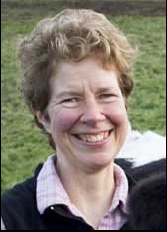
Thanks to the permanent conservation of Dimond Hill Farm in Concord, where Jane Presby grew up raising and showing registered Ayrshires in 4-H, she was able to come back to farming after a 34-year career in teaching. The landmark farm is now a popular vegetable and fruit farm offering walking trails, nutrition classes, and hosting weddings, meetings and events in its historic and scenic setting.
Judy Stone is working with Five Rivers, LCHIP, and other funders to secure a conservation easement on 200 acres of Stone Farm in Dunbarton, a goal shared by her late husband Jim. The Stones retired from the dairy business in 2006, but the historic property has been in the Stone family since the 1780s. Stone continues to live at the farm and leases the land to Andy Carter of New Boston— a full-time farmer who grows hay on the Stone land to feed his growing herd of beef cattle.
*****
Adam Crete of Highway View Farm in Boscawen hosted a field tour last week of double-cropped triticale ready for harvest as haylage. Crete is one of the of farmers in all 10 counties participating in field trials of the viability of double-cropping systems in New Hampshire for dairy feed. The strategy follows shorter-season varieties of field corn with cover crops that can also be harvested for feed. Funded by USDA Natural Resources Conservation Service (NRCS), the project is a collaboration of UNH researcher Iago Hale, UNH Cooperative Extension and the farmers. Based on results from the two-acre trials, Crete expanded the practice last year to 60 acres on the Merrimack River. He said the shorter-season corn yields were comparable to longer-season varieties, so the double crop is a welcome boost to his feed inventory.